
Pebble Hill Church
Celebrating 50 years
A Brief History Of “Pebble’s 50 Years Of Peace”
WELCOME
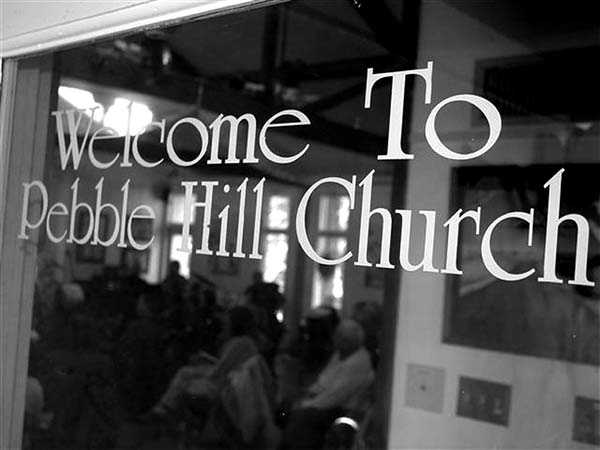
HISTORY

A HAPPENING PLACE
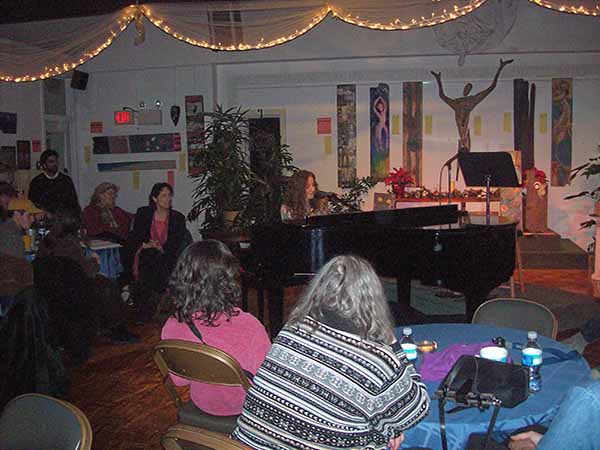
A SPIRITUAL PLACE

A NEW BEGINNING

NEW TRADITIONS
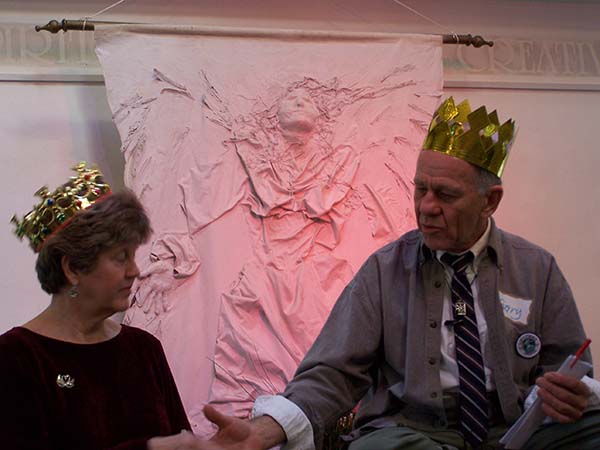
A NEW ADDITION
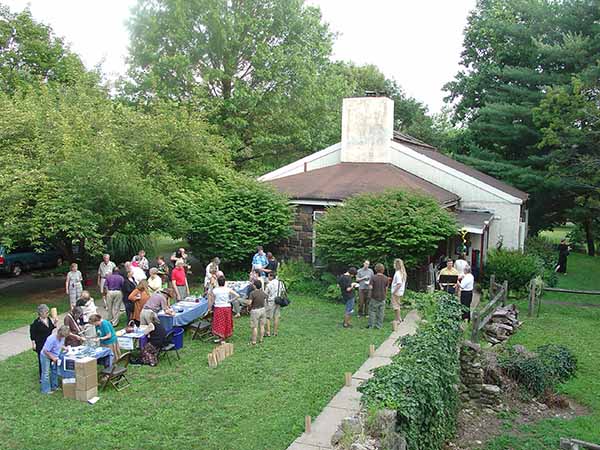
OUR INTERFAITH JOURNEY BEGINS
PEBBLE HILL CHURCH BYLAWS
Bylaws Revision/July, 2025
CREDO: We live a life by love transformed, by spirit empowered, by creative imagination guided, in peace with all.
ARTICLE ONE: NAME, ADDRESS, AND CONTACT INFORMATION
Section 1. The name of our non-profit religious organization is PEBBLE HILL CHURCH, aka PEBBLE HILL INTERFAITH CHURCH.
Section 2. The Church meets at the Red Barn, 320 Edison Furlong Road in Doylestown Township, Bucks County, Pennsylvania.
Section 3. The Church mailing address is Pebble Hill Church, 320 Edison Furlong Road, Doylestown, PA 18901; the website is https://www.pebblehillchurch.org/; the email address is pebblehillchurch1968@gmail.com; and the phone number is 215-348-3428
ARTICLE TWO: STATEMENT OF PURPOSE
Pebble Hill Church is a non-profit religious organization, founded in 1967 and incorporated in 1977. Its purpose is to encourage and support members in their individual religious and spiritual growth and expression, and to acknowledge its members as ministers to one another. Pebble Hill Church is committed to peace and is an official member of the national network of Peace Sites under a program sponsored by SANE of New Jersey. Pebble Hill Church was founded and nurtured by the Reformed Church in America and is now an inclusive interfaith ministry.
ARTICLE THREE: MEMBERSHIP
Section 1: Membership is reserved for those who reside within commuting distance of our campus and can participate fully in the life of the community, or who live farther away but attend frequently on Zoom.
Section 2: Membership allows one to vote and to serve on church council, the governing body of the church. The path to membership involves 1) sampling our Sunday celebrations 2) seeing if the church’s values and mission are a fit for you 3) deciding to commit to the church community, and 4) affirming your decision by signing the church’s membership book.
To take the step of joining, a candidate lets their intentions be known to the celebration minister. A date will be set for the book-signing ceremony at a Sunday celebration, or privately with the minister presiding if they can’t attend or prefer not to attend. The ritual provides an opportunity for the community to welcome and get to know the new member. New members must supply their email address and phone number. Children younger than 16 have no voting privilege; from the age of 16 they may become voting members when they feel ready.
Section 3: The membership roll is maintained either by the secretary or a volunteer appointed by council. They may from time to time confirm the status of members by emailing them up to three consecutive times to find out if they wish to remain active. If the member fails to reply or answers “no,” their names are moved to the inactive list.
- A) Inactive Members. Inactive members lose the right to vote or serve in elective office. They will be reinstated if they request it, except that members who have had their membership suspended or revoked may be reinstated only by specific action of council.
- B) Active Members. Persons will be considered active if they have signed the membership book, are in good standing, and are not currently listed as inactive. Membership privileges (voting, holding office) as defined in these bylaws will be extended only to active members.
Section 4: Addressing Disputes: The church offers three avenues for addressing disputes between members or between members and the church council: Conflict Resolution, Clearing, and Due Process (See details at the end of the bylaws.) Parties may select which method to use. The church has a list of trained facilitators from which to choose.
Section 5: Suspended Membership. Members may be suspended or reinstated by majority vote of council, so long as they are given the opportunity for mediation as provided in Section Four. In disputes between congregants and the church council, a congregant and/or their advocate must be allowed a confidential hearing before a decision is reached and a penalty, if any, is assessed.
Section 6: What draws a suspension? Members may be suspended if found to be negatively affecting the operation, reputation, or communal spirit of the church, or presenting a credible threat to other congregants. Council is empowered to call police to remove any person who physically or verbally threatens others, disrupts proceedings, or trespasses on church property.
Section 7: Penalties for being suspended may include suspension from attending church services and/or events, either online or in person, or both; removal from church positions; being barred from church grounds; or other suitable measures at the discretion of council.
Section 8: Requirements for reentry into the church community for suspended persons: a) completion to the satisfaction of all parties of one of the paths to reconciliation mentioned in Section 4; b) a request that the suspension be lifted; and c) continued good behavior.
ARTICLE FOUR: THE CHURCH COUNCIL
Section 1. The church council is the board of directors of the church. It is responsible for the well-being, operations, and care of the life, work, property, programs, celebrations, finances, events, and people of the church community. All business of the church is transacted by the council, which functions by majority vote. Federal law requires a minimum of three board members for the church to qualify for 501c3 tax-exempt status.
Section 2. Council may meet online and conduct business online. A majority of the members constitutes a quorum. Council may authorize one or more of its members to act on its behalf.
Section 3. Council is composed of six elected members, plus the following appointed church officers: celebration minister, secretary, and treasurer, all of whom have voting privileges. At the annual organizational meeting the council elects a president and a vice president from among the six elected church members. The secretary may also be appointed from among the six elected members of the council or from the congregation at large. If a seat is vacated mid-term, council will fill the vacated seat by appointment until the end of the term.
Section 4. The council meets at least once a month at a time and date set by council members. In emergencies, meetings may be postponed or canceled by the council president. The council president, vice president, or a majority of council members, may call special meetings.
Section 5. Members of church council shall conduct themselves so as to avoid any conflict of interest. No council member may vote on or authorize any issue which may financially benefit that council member, or members of their immediate family, unless such benefit is universally shared by the active membership.
Section 6. Council meetings are open to the community (usually via Zoom or similar modality—the link shall be distributed by email) and everyone is encouraged to attend. In case of staff or personality issues, council may go into executive session to maintain confidentiality for the individuals involved. Executive session means that only council members and those they invite may attend.
ARTICLE FIVE: NOMINATION AND ELECTION TO THE CHURCH COUNCIL
Section 1. Only active members of the church who meet the requirements of the State of Pennsylvania for board members of a non-profit organization may be elected to the church council. The State requires that they be a “natural person” 18 years old or older. (“Natural person” means a human being, not an organization or corporation.)
Elected council members serve a one-year term. Treasurer, secretary, and celebration minister are not limited to terms but serve at the council’s pleasure. There is no limit to the number of consecutive terms a person may serve on council, except that they must be removed if their membership is suspended or revoked, or they have committed malfeasance of any kind as determined by a majority of council members. Council members must sign in to celebrations at least twice per month, unless they have an acceptable excuse.
Section 2. Council elections: In August, council will announce the upcoming election and call for candidates. In September, the candidates will be introduced to the church community via electronic media and at Sunday celebrations. Only persons who are active members of the church with voting privileges may vote in church elections.
The election will be held in September. Ballots shall be tabulated by a team of one council person and one non-council person no later than the last Sunday in September. Council seats will go to the top 6 vote recipients. The first Sunday celebration in October the newly elected council will be introduced to the church community. The new council will hold its organizational meeting in October and continue with regular meetings once a month thereafter.
Section 3. At its organizational meeting, council will elect a president and vice president and appoint/reappoint a secretary and a treasurer. The Treasurer can be a corporation or natural person who is at least 18. The same individual can hold two or more offices, but may only sign legal paperwork as one officeholder. Hence, it is best to have different people fill each role.
Section 4. Committees: The State requires each committee to have a designated board member responsible for oversight and accountability, ensuring the committee’s activities align with the organization’s mission and legal obligations.
Section 5. If a council member is unable to fulfill their term, they may request a leave of absence or resign. Council members will notify the president if they are unable to attend a meeting. Members who miss three consecutive meetings without an acceptable excuse will be replaced and their seat filled by appointment. Council members must attend at least two celebrations per month, unless they have an acceptable excuse.
Section 6. A council vacancy may be filled at any time through an appointment. Council may appoint the candidate from the previous election who received the next-highest number of votes, but it may consider other choices as well. Another option is to wait until the next council election.
ARTICLE SIX: Officers of the Church
Section 1. The officers of the church are the president, vice president, secretary, and treasurer.
Section 2. The president of the church council is directly responsible for the ongoing work of the church council. The president works in direct relationship with the church community. The president sets the agenda and presides at council meetings, unless they empower others to preside. The president is authorized to make emergency decisions if necessary and report such actions to the council at the next opportunity. Emergency actions shall relate to the safety of people, the protection of church property, the continuance of church operations or the requirements of courts of law or enforcement agencies.
Section 3. The vice president assists the president as directed and assists as a liaison to the church community. The vice president presides at council meetings in the president’s absence.
Section 4. The treasurer is a voting member of council who is appointed or reappointed for a one-year term at council’s annual organizational meeting. Terms of office may be consecutive for as long as council desires. The treasurer reports to council and works directly with the president.
The council and the treasurer are responsible for all financial obligations of the church, including the collection and bookkeeping of monies and statistics related to pledges, offerings, special gifts, receipts from events, etc. The treasurer is responsible for drafting a preliminary annual budget for council’s review and approval.
The treasurer and the president may open bank accounts for church funds. The treasurer, the president, and others designated by council may sign for church funds. The church will carry insurance to bond these individuals.
Section 5. The secretary is a voting member of council who is appointed or reappointed for a one-year term at council’s annual organizational meeting. The position may be filled either by an elected member of council or by a congregant outside of council. Terms of office may be consecutive for as long as council desires. The secretary is responsible for signing documents when so directed by council, and, when requested, writing official correspondence. The secretary works directly with the president of the council.
Minutes of council meetings are recorded by Zoom, which provides summaries and transcripts that are distributed electronically to council members and are saved to the church’s hard drive. The hard drive must be regularly updated and maintained by the secretary or other volunteer.
ARTICLE SEVEN A (DEACTIVATED): COORDINATING MINISTER
(The coordinating minister is a deactivated position that can be reactivated by council. At this writing in July, 2025, the position had been unfilled since 2001, except for one year. Should it be reactivated, these bylaws will pertain to that position. It was deactivated because the coordinating minister is expected to participate full-time in all aspects of the church’s life, and funds were lacking for salary and benefits commensurate with such responsibilities. In place of a coordinating minister, the church council has charged a part-time celebration minister (formerly called the celebration coordinator) with duties related to maintaining Pebble’s spiritual life and weekly celebrations. See Section 7: Celebration Minister.)
Section 1. The coordinating minister is responsible for coordinating the various aspects of ministry within the total life of the church. The coordinating minister may delegate duties as needed, but is responsible for Sunday celebrations, building community, and day-to-day operations of the church. They work in direct relationship with the president of council to implement the church’s open and inclusive Interfaith ministry under the guidance of the church council.
Section 2. The coordinating minister is automatically a member in good standing of the church. The coordinating minister’s performance is subject to review once a year. The coordinating minister’s salary and benefits are reviewed once a year during the development of the next year’s budget.
Section 3. The focus of the coordinating minister is on encouraging and enabling a shared and mutual ministry with all the community of the church. The coordinating minister is to function as a catalyst and an organizer both within the church community and outside of it. They will encourage individuals to participate in celebrations and motivate them and the entire community to explore, reflect, understand, share, discover meanings, innovate, and grow.
The coordinating minister leads the celebration team, which is composed of the coordinating minister, the celebration minister, and one volunteer selected from the congregation. The volunteers are rotated among the congregation from time to time in order to bring new ideas and fresh perspectives to the celebration team.
Section 4. When a vacancy occurs in the position of the coordinating minister, a search committee is appointed by the church council to find a replacement. The search committee, including both council and non-council church members, will work under and report to the council. The search committee should prepare a clear, concise description of who we are and what we are looking for in a pastor, plus the range of salary and benefits the church is prepared to negotiate.
Section 5. Candidates will be referred to the church council, which will interview them. If council approves, the candidate will be asked to deliver a talk, or sermon, at a Sunday celebration, which shall be followed by a community reception. Council will get feedback from both the community and the candidate. If council decides the feedback warrants, the active community will vote within two weeks on whether to hire the candidate. If the majority vote is yes, council will make an offer to the candidate. If the candidate accepts the offer, they are installed as coordinating minister for a 6-month probationary period leading to permanent employment.
Section 6. After the probationary period, council will continue to periodically review the performance of the coordinating minister and other paid and volunteer staff. Council will have complete control over all hiring and firing.
ARTICLE SEVEN B
Section 1. Celebration Minister. In the absence of a coordinating minister, the celebration minister serves as a member of council with voting privileges. The celebration minister is appointed by the council and serves at the pleasure of council. The celebration minister provides a spiritual center for the community, leading in the development, planning, staffing, and presentation of Pebble Hill’s Sunday celebrations.
Section 2. The celebration minister is a part-time position to be filled by a person with an appropriate background (such as ordination, spiritual training, spiritual teaching, or outstanding spiritual practice) deemed by council on a case by case basis to be adequate to the church’s needs. For purposes of these bylaws, “spiritual” means relating to religion or religious belief, or, more broadly, to the human spirit or soul as opposed to the material or physical realm.
Section 3. The celebration minister ordinarily stands in for the coordinating minister when they are absent or the position is vacant. The celebration minister may receive a salary, which is reviewed once a year during the development of the budget. Any recommended salary change is submitted with the budget to the council for approval.
ARTICLE EIGHT: CHURCH COMMUNITY MEETINGS, AKA TOWN HALLS
Section 1. When needed, the church council may call a meeting of the church community. Normally, these meetings will take place on Sunday, either during or following a celebration. Whenever possible, the church community will be given two weeks advance notice of such meetings. The president or vice-president of church council will moderate such meetings.
Section 2. Community meetings may also be called by petition, presented to the church council, containing the signatures of fifteen (15) active members, to discuss items stated in the petition.
ARTICLE NINE: ONGOING RESPONSIBILITIES
Section 1. Budget: At the November council meeting, the treasurer presents a proposed annual budget for discussion. In December, council approves a preliminary budget, which is posted at church and on the internet for suggestions from the congregation. In January, a final draft is posted both online and at the red barn. In February, council adopts the budget at its regular meeting.
Section 2. The church council and the treasurer are in charge of seeing that the church carries out all financial obligations, including paying all bills and accounting for the collection, bookkeeping, and financial statistics related to all pledges, offerings, special gifts, receipts from events, etc. The treasurer and president are allowed to open bank accounts with council approval. The treasurer, the president and others designated by council are allowed to sign for church funds. The church will carry insurance to bond these individuals.
Section 3. The bookkeeper. (Due to lack of volunteers, the position of the bookkeeper has been consolidated with that of the Treasurer and may or may not be reactivated. Should it be reactivated, these bylaws will govern that position.) Appointed by church to serve at council’s pleasure, the bookkeeper is responsible for the collection, bookkeeping, records, and financial statistics related to pledges, offerings, special gifts, receipts from events, etc. The bookkeeper is not automatically a member of council and does not have a vote on council business. They work with the treasurer and church council, so that a total financial picture is always kept before the church council.
Section 4. Children’s Coordination Task Force (CURRENTLY DEACTIVATED: Pebble’s elderly congregation has not been able to attract young families. Should the task force be revived, it will function under these bylaws.) NOTE: The task force must never leave children in the care of only one adult: TWO OR MORE ADULTS MUST BE IN ATTENDANCE. As it becomes available, more guidance can be found in the folder Council/Council Documents.
The CCTF is appointed by the church council from community members for one-year terms. It is responsible to the church council, and its members are eligible for reappointment. This task force is responsible for coordinating the inclusion of children in the total life and work of Pebble Hill Church. The task force includes a children’s minister, at least one church council member, and interested volunteers from the church community.
Section 5. Suggestions: A person or group of persons may suggest an idea to any member of church council, and it will be put on the agenda for consideration. Or, any person or group of persons may attend a council meeting to present their idea or dream, and it can be acted upon at that time or referred to an appropriate committee for further study.
Section 6. Committees. The council may create and define various committees as needed. Committees elect their chairpersons. Chairpersons report significant developments to the council president or their designee and may be placed on the council’s monthly agenda, as needed. Council may disband the committees when they are no longer needed. The State requires that each committee of a nonprofit organization has a designated board member responsible for oversight and accountability, ensuring that the committee’s activities align with the organization’s mission and legal obligations.
Section 7. The school of sacred ministries. The school is a largely self-governing entity within the church. It functions as an academic and educational training program for adult ministerial candidates and others seeking intensified spiritual study. The relationship between the school, church council and the church community as well as the school’s operating authority are formalized in the school’s charter, as approved by the church council. Church council appoints church members to act as liaison between council and the school.
ARTICLE TEN: COMMUNITY MEETINGS AKA “TOWN HALLS”
Section 1. All congregants of Pebble Hill Church are urged to create, dream, and recommend new ideas and directions of ministry, workshops, retreats, celebrations, programs, and areas of involvement. The organization of the church will readily respond to innovative ideas, and is committed to full participation by community members.
Section 2. From time-to-time church council will call meetings of the congregation in order to inform the community and obtain its feedback about the operations, opportunities, and challenges facing the church. These “town hall” meetings welcome all congregants, but only active members are allowed to vote.
ARTICLE ELEVEN: PUTTING OUR PURPOSE INTO PRACTICE
Section 1. In putting our purpose into practice, we shall design all our activities, programs, celebrations, and community work such that we constantly evaluate and consider how what we do affects everyone, both within our church and in the broader community, in regards to our spiritual growth, a celebrative life, inclusivity, human dignity, stewardship, peace, love, and justice.
ARTICLE TWELVE: MATTERS OF PROCEDURE
Section 1. Consensus: Consensus comes into play when a group leader senses, without a vote, that most or all present support a proposal. If so, they may simply declare the proposal passed by consensus. In a busy meeting, it saves valuable time. However, if any member of the group calls for a vote, one must be taken. Similarly, a leader may declare a proposal has been adopted without taking a vote, simply by asking if there are any “no” votes. If there are no votes, then a full vote must be taken.
At Pebble Hill Church consensus has traditionally been preferred to voting because it can be an exercise in humility and community building. It requires persons to forego further debate when they perceive that a proposal to which they object is overwhelmingly supported by most of the voting body. Experience has taught, however, that some persons are incapable of selflessly standing aside. When that becomes evident after due discussion, the group leader or any other member of the group may call for a vote.
Consensus may be used at such meetings as community task forces, committees, planning sessions, etc.
Consensus may not be used to change the bylaws or hire/discharge staff members.
ARTICLE THIRTEEN: AMENDMENTS, ADDITIONS, AND DELETIONS TO BYLAWS
Section 1. These bylaws may be modified with amendments, additions, or deletions, by an affirmative vote of 75% of active members in good standing attending a meeting of the church membership, either in person, on Zoom or its equivalent, or by proxy given to the president of council.
Section 2. At least 21 days prior to the membership meeting, the members shall be notified by email and by posting on the Pebble website a summary of the proposed changes to the bylaws and of their opportunity to receive by email a copy of the complete text of the proposed changes. The complete text of the proposed changes shall be posted at the church.
Section 3. A notice of the time, date, and location of the membership meeting for the purpose of amending the bylaws shall be announced in the Sunday program for three consecutive Sundays preceding the meeting.
Section 4. Only active members in good standing can propose an amendment, addition, or deletion. A member must first present the proposal, in writing, to the church council. The council must approve changes to the bylaws before they are presented to the members, except as provided for below. A proposed change to the bylaws may be presented at a membership meeting, contrary to the prior expressed desire of the council, if such proposal is presented attached to a petition signed by twenty (20) active church members, calling on the council to call a membership meeting for the purpose of voting on the proposed change. Such petition must be presented to the church’s secretary, vice president, or president. Said meeting will be conducted in accordance with all applicable sections of this article.
END NOTES
(Note: The following are administrative documents which can be modified by action of council without changing the bylaws.)
Pebble Avenues for Resolution of Conflicts
It is recognized that conflicts may emerge at times within a community, therefore, it is essential that a process for addressing conflicts be employed to ensure the safety and sovereignty of each individual.
The following are three council-endorsed avenues for addressing conflicts and registering complaints and grievances. Be sure to keep the matter confidential so as to avoid defaming anyone’s character.
- General Conflict Resolution Procedure: Mediation
In the event that one individual has a grievance against another, the first recommended option calls for mediation or a clearing process. An individual may contact council for a list of facilitators trained for such a process.
- Acknowledge and Define the Conflict:
Acknowledge: Recognize that a conflict exists and needs to be addressed.
Define: Clearly identify the core issue and the perspectives of each party
involved. Gather information to understand the root cause.
- Find a Neutral Setting:
Choose a safe and neutral location for discussions, free from distractions
and power imbalances.
- Gather Information and Encourage Open Communication:
Active Listening: Allow each party to express their views and concerns
without interruption. Practice active listening to understand their
perspectives fully.
- Clarify the Source and Underlying Issues:
Identify the specific needs and interests that are not being met, leading to
the conflict.
- Develop a Mutually Acceptable Solution:
Brainstorming: Explore potential solutions collaboratively with all parties
involved.
Negotiation: Work together to find a solution that addresses everyone’s
core concerns, even if it requires compromise.
- Implement and Monitor the Solution:
Action Plan: Develop a clear action plan outlining specific steps and
responsibilities.
Follow Up: Regularly check in with the parties to ensure the solution is
effective and address any emerging issues.
Key Principles in Conflict Resolution:
Empathy: Understand and acknowledge the perspectives and feelings of all
parties involved.
Respect: Treat everyone involved with respect and professionalism, even during
disagreements.
Focus on Interests, Not Positions: Explore the underlying needs and interests
driving each party’s stance, rather than just their stated positions.
Collaboration: Work together to find a solution that meets everyone’s needs as
much as possible.
Note: This is a general framework, and the specific steps and approaches may need to
be adapted based on the nature and complexity of the conflict.
- Clearing Blockages to Understanding and Acceptance
This technology is meant to be used when you have a disconnection with another person or group. It is important that you are willing to let go of being right and take responsibility before you attempt to use this model. The goal is to reveal yourself, own your projection and re-establish connection. For effectiveness, stick to the script.
CREATE RESOLUTION TOGETHER
I commit to curiosity and letting go of being right.
I commit to taking 100% responsibility for the issue.
I commit to creating a win-for-all resolution.
SCRIPT FOR PERSON CLEARING THE ISSUE
Ask for a clearing by affirming a meaningful relationship “I have an issue I’d like to clear with you. Is now a good time?” “If not now, when?”
- “The specific FACTS are…” (Recordable facts; not judgments)
- “A STORY I make up about you/me/the group is…”
- “My FEELING is…” (Mad, Sad, Scared, Glad, Shame)
- “I specifically WANT…” (This is not a demand or entitlement but instead a way to be known)
- “How I CREATED this disconnection with you is…”
- PROJECTION: “The part of me I see in you that I have an aversion/attraction to is…
SCRIPT FOR PERSON LISTENING TO UNDERSTAND
- “What I hear you saying is…” (Reflect or paraphrase without interpretation)
“Is that RIGHT?” (If not, reflect again)
“Is there MORE?” (Ask with curiosity)
- “Are you CLEAR. Have you said everything you have to say and felt everything you have to feel?” (If yes, move on. If not, go back to “Is there more?”)
- Is there a NEXT ACTION step? (if yes, who will do what by when?)
- Appreciate the person for choosing to clear the issue.
If the listener also has issues, it is recommended that you pause and then switch roles.
III. Pebble Hill Due Process
Use Due Process if preferred to mediation or a clearing process, or if the conflict is between an individual and a committee or council.
In the event that an individual has either worked with mediation or a clearing process and still feels the conflict is not resolved or does not wish to use mediation or a clearing process, the individual may bring their complaint to the attention of council for Due Process.
The individual filing the complaint should proceed with the following as they privately address the council president or vice president with their complaint, including all specific facts relating to the disagreement or conflict, and their proposed solution. Attach additional pages or documents as necessary. The other party will be informed of your complaint and will be requested to respond in kind.
Council will get back to you with a confidential response following a review of all the facts from both parties.
Pebble Hill Due Process Complaint Form
Instructions: Complete, sign, and make two copies of the original form.
Give the original to:
Council President, Vice President, or Secretary
Keep one copy for your records.
I, the undersigned, do hereby file this due process complaint notice against:
Name of Individual
Submitted by: _______________________________________
Submitted to: _______________________________________
On the back, or a separate sheet of paper, describe the nature of the complaint (the concerns that led you to file this due process complaint), including all specific facts relating to the disagreement. Attach additional pages or documents as necessary. State the facts as you have personally witnessed. Hearsay or reports from others will not be acceptable testimony.
Date: ___________________________
State your proposed solution to the problem to the extent known and available at
this time. Attach additional pages or documents as necessary.
Name of Person Completing This Form:______________________________________
Signature: _____________________________________________________________
Date: ____________________________
16 Pebble Principles
Principle #1
Pebble Hill is inclusive. We welcome all, regardless of race, mode of dress, religious background, social standing, financial status, sexual preference or sense of humor. There is no litmus test. The only requirement for membership is asking for it.
Principle #2
Pebble Hill is non-judgmental. We do not have standards against which we measure the choices others make.
Principle #3
Pebble Hill is person-oriented. We celebrate each individual and raise each other up to be a beacon of Spirit, regardless of past mistakes or personal differences. We see God working in and through us, communally and individually.
Principle #4
Pebble Hill is trusting. We trust that others will accept who we are. It is trust that makes it possible for us to be ourselves. Without such trust, we could not reveal our stories–and it is our experiences that instruct and bind us together.
Principle #5
We share our beliefs. This creates a rich atmosphere in which spirituality blossoms. Everyone is seeking the Way and is eager to hear about the spiritual journey of another. All religions and spiritual practices are respected equally.
Principle #6
We minister to each other. Everyone is unique and has a unique ministry to impart. This can not happen unless we are open to each other, so an element of ministering is remembering to be accepting of others.
Principle #7
Pebble Hill has no dogma or hierarchy. No one tells us what to believe. We are led by Spirit on fresh paths of discovery. As we are unique spirits, we are seekers of a spiritual way that may be unique to each of us.
Principle #8
Pebble Hill is creative. We celebrate life through art, music, dance, plays, ritual, relationships. We are free to show our gusto. Talent is not mandatory.
Principle #9
Pebble Hill is democratic. Stemming from our belief that God made no favorites, we give everyone his or her say. Our council is elected. Any member may run for a seat.
Principle #10
Pebble Hill has no gender or sexual bias. We are a bastion of sexual equality, where men and women work together as equals and routinely share responsibilities.
Principle #11
Pebble Hill is joyful. Most of us believe in a loving universe, therefore, we come together in joy. We dance, move to rhythm, clap, shout and laugh. We applaud nearly everything–sometimes even prayers!
Principle #12
We share feelings. We try to understand and relate to the emotional states and needs of others; we offer and receive support gratefully. We are considerate and gentle.
Principle #13
Pebble Hill celebration space reflects the PH spirit. It is distinctively open, full of possibilities, constantly being modified. We have ever-changing artwork, plants and floral displays, seating arrangements and musical combos. Candles and natural objects that vary from Sunday to Sunday enhance our altar. The sunlight finds many avenues into our meeting room. Our views are of grass, trees, plantings and the sky.
Principle #14
Pebble Hill puts everyone in the show. Celebration is arranged so that banks of seats face each other, making the attendees themselves a focus as well as the speakers and entertainers. This enhances the celebration experience as the audience becomes part of the show. In addition, many celebrations feature multiple members of the community “up front,” where they share their lives and taste the love and applause of the community–an extremely empowering experience.
Principle #15
Pebble Hill encourages ministry through touch. Recognizing that touch is both therapeutic and spiritual, hugs are not uncommon. Personal boundaries, though, are paramount and to be respected.
Principle #16
Pebble Hill is affirming. We affirm the humanity of all, and the spiritual inheritance of each individual. Everyone’s gifts are important. Everyone’s journey is important. Everyone’s dream is important.
Questions You May Have About Pebble Hill Church
How do I get there?
Where do I park?
Where do I go?
Where do my kids go?
What is the Sunday celebration?
How long is the celebration?
What does the church believe?
What do I wear?
What about pets?
What else happens on Sunday?
What happens on other days?
Are you accessible to the handicapped?
Are the facilities available to rent?
How do I become a member?
What else is there to do at Pebble Hill?
How is the church supported?
Our Celebration Team

Rev. Rosalind Cauffman
Celebration Coordinator
Rev. Rosalind began attending Pebble and participating on the Celebration Team in 2013 after being ordained in 2012 at the School of Sacred Ministries. She was a longtime student at traditional seminaries in two other states before moving to PA. She is especially interested in ministry for the end of life and the "second half of life."
Our Church Council
Jeff MacNair
Council President
Alan Dench
Treasurer
Susan Manning
Secretary
Diana Young
Board Member
Dave Perkins
Board Member
Judy Henderson
Board Member
Suzanne Gority Wolf
Board Member
Membership Information
There are many ways to get acquainted with Pebble. All are welcome to create and attend our Celebration and social functions. If you are musically inclined, our music directors would like to hear from you. Pebble Hill Church sponsors many groups (see our weekly and monthly event calendars), and we have a reat annual summer retreat.
For more information, get in touch here. We invite you to join us and share your light; traveling together on this journey of life, love, peace, and joy.
Financial Support
Pledge Your Support
Donations
Get In Touch
We would love to hear from you.

Church Office
215.348.3428

Church Address
320 Edison-Furlong Road
Doylestown, Pa. 18901
320 Edison-Furlong Road
Doylestown, Pa. 18901
215-348-3428
PEBBLE HILL INTERFAITH CHURCH
An inclusive community seeking Truth and Love
Contact our office at: PebbleHillChurch1968@gmail.com
PEBBLE HILL INTERFAITH CHURCH
An inclusive community seeking Truth and Love.
320 Edison-Furlong Road
Doylestown, Pa. 18901
215-348-3428
Contact Us
Contact our office at: 215-348-3428
Contact website or email support at: